 GERMANY
 ENGLISH
 FRANCE
 SPAIN
SPAIN PORTUGAL


Blog
PVC WINDOW MANUFACTURING MACHINES
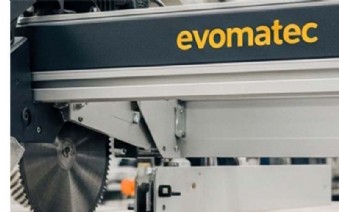
PVC Window Manufacturing Machines – Strategic Guide for Professional PVC Window Production
Anyone who wants to buy PVC window manufacturing machines is making a fundamental decision about the future of their production: the machines you choose will determine product quality, process reliability, delivery times, energy efficiency and, not least, the CE-compliant safety of your entire PVC window factory. Modern machines for PVC window production are highly specialised systems in which mechanics, control technology, software and occupational safety interact closely. A wrong or incomplete investment decision can weaken your competitiveness for years, while a well-planned decision creates room for growth, higher margins and stable quality.
Evomatec has been supporting companies in planning, implementing and inspecting plants for window and profile processing for many years. Drawing on this broad experience, machine inspections are planned and carried out with exceptional care: all quality-critical assemblies, safety-related functions and CE-relevant documentation are checked systematically, so that operators can rely on a technically sound and legally compliant assessment of the entire line. Thanks to our long-standing project experience from a wide variety of customer installations, we structure inspections in such a way that quality and CE-compliant safety are examined in depth and documented transparently.
This guide is aimed at managing directors, production managers, technical managers and investment decision-makers who want to buy PVC window manufacturing machines, modernise existing lines or increase their level of automation. It explains the basics of PVC window production, presents key machine types, highlights selection criteria, cost structures and future perspectives, and shows what role quality-oriented inspections and CE safety actually play in day-to-day operations.
H2
Fundamentals of PVC Window Production
H3
Process Steps in PVC Window Manufacturing
To choose the right PVC window manufacturing machines, you first need a clear understanding of the typical process chain in PVC window production. Machine technology must follow the process – not the other way around.
In a classic PVC window factory, several core steps can be distinguished:
-
Storage and provision of PVC profiles in bar lengths
-
Cutting the profiles to length and mitre
-
Welding the corners of frames and sashes
-
Corner cleaning and post-processing of weld seams
-
Routing and drilling for hardware, handles, drainage and additional components
-
Processing and fitting of steel reinforcements
-
Glazing preparation, final assembly, gasket insertion
-
Final inspection and packaging
Almost all of these steps are carried out by dedicated PVC window production machines, each tailored precisely to certain profile systems and capacity requirements. If you want to buy PVC window machinery, you should therefore start by analysing your own process chain: which quantities, which element sizes, which profile systems and which variety of designs do you need to handle? Only with this clarity can you avoid future bottlenecks and wrong investments.
H3
Importance of Machinery for Quality and Function
End customers perceive the quality of a PVC window mainly through look and feel: tight joints, clean corners, smooth hardware, a well-sealing closing line. Behind all of this, however, lies a sophisticated combination of profile geometry, glass build-up, gasket routing and precise machining.
Key quality features directly influenced by PVC window manufacturing machines include:
-
Precise cutting lengths and angle accuracy
-
Repeatable welding parameters and stable weld seams
-
Clean, burr-free corners after corner cleaning
-
Accurately positioned routings and drillings for hardware
-
Stress-relieved processing of steel reinforcements and accessories
The more precise and repeatable your machines are, the lower the levels of rework, scrap and complaints. This is exactly where modern, well-designed PVC window machines differ sharply from outdated or poorly maintained technology.
In customer projects, Evomatec attaches great importance to inspections that are not reduced to external features but delve deeply into the functioning of the line. Gearboxes, guides, clamping systems, control components and safety logic are examined using a structured test programme. Because of the extensive experience gained from many customer installations, we can ensure that these inspections are carried out with a very high level of detail, a strong focus on quality and a consistently CE-oriented perspective.
H2
Historical Development of PVC Window Manufacturing Machines
The current variety of PVC window machinery is the result of continuous technical development. From manual cutting to digitally networked, fully automated lines, the technology has evolved in several stages.
H3
From Manual Workstations to Specialised Window Lines
In the early days, PVC profiles were processed with relatively simple, often multi-purpose machines. Chop saws, basic welding units and manual finishing dominated the picture. Quality and dimensional accuracy depended heavily on the experience of individual operators.
As requirements for thermal insulation, sound insulation, burglary resistance and serial production increased, dedicated machine types emerged:
-
Double mitre saws for precise 45° and variable mitre cuts
-
Two-, three- and four-head welding machines for parallel welding operations
-
Automatic corner cleaning machines with defined tool paths
-
Special routing and drilling machines for hardware and drainage
-
CNC machining centres for PVC profiles, combining several steps in a single system
Today, the range spans from compact stand-alone machines for smaller fabricators through to fully automated lines with integrated data connectivity, production planning and quality control. Anyone who wants to buy PVC window manufacturing machines is operating in a highly developed technological environment in which careful selection and competent advice are essential.
H3
Growing Importance of CE Safety and Documentation
In parallel with technical advances, the importance of standards, directives and CE conformity has increased significantly. The implementation of the European Machinery Directive, compliance with harmonised standards and the integration of safety-related control technology are now mandatory prerequisites for the legally compliant operation of a machine.
This applies not only to new construction, but also to modifications, retrofits and the combination of several machines into production lines. In such cases it is particularly important that inspections consider not just the individual machine, but the entire system.
From numerous projects, Evomatec has learned how crucial a structured, practical inspection concept is. We therefore design inspections so that mechanical safety, electrical equipment, functional safety and documentation are combined into a coherent overall concept. Thanks to our long-term experience in many different customer plants, we are able to carry out assessments with particular precision and a clear focus on both quality and CE-compliant safety.
H2
Key Machine Types in PVC Window Production
To buy PVC window manufacturing machines in a targeted way, it helps to take a closer look at the most important groups of machines. Each group fulfils a specific task in the overall process and has its own technical priorities.
H3
Sawing Machines for PVC Profiles
Sawing machines are often the starting point of the production chain. They determine how precisely profiles are cut to length and mitre. At this stage you are already laying the foundation for all subsequent machining steps.
Important variants include:
-
Single-head or chop saws for flexible cutting
-
Double mitre saws for cutting frames and sashes
-
Special saws for glazing beads, accessories and steel reinforcements
When selecting a PVC profile saw for window production, key criteria include:
-
Cutting and repeat accuracy
-
Rigidity and vibration damping of the machine frame
-
Quality of guide and drive systems
-
User-friendly adjustment options (manual, semi-automatic, NC)
-
Efficient chip extraction and easy cleaning
Errors made during cutting are difficult to correct later. Angle deviations, length errors and poor support lead to visible gaps, fitting problems and increased rework. A high-quality sawing solution is therefore a decisive foundation if you want to produce economically in the long term.
H3
Welding Machines for PVC Window Frames
The welding machine is the heart of classic PVC window production. This is where cut profiles are joined into frames and sashes.
Typical machine types are:
-
Single-head welding machines for lower quantities and special shapes
-
Two-head welding machines for standard frames
-
Three- and four-head welding machines for serial production with high output
Key performance features of PVC window welding machines include:
-
Precisely adjustable welding parameters (temperature, pressure, time)
-
Repeatable clamping systems and defined welding gaps
-
Flexibility for different profile systems and weld seam widths
-
Robust construction for uniform corner formation
Welding quality determines tightness, structural strength and appearance. In professional inspections, welding technology is therefore examined with particular care: in addition to visible features, dimensional stability, repeatability and compatibility with the profile system are evaluated. Evomatec contributes long-standing expertise here and carries out welding machine checks with a high level of detail to ensure that both quality requirements and CE-related aspects are actually met.
H3
Corner Cleaning Machines for Weld Seams
The weld beads generated during welding must be reworked for visual and functional reasons. This is the job of corner cleaning machines for PVC profiles, which remove excess material at inner and outer corners and create defined edge shapes.
Powerful corner cleaning machines are characterised by:
-
A mix of milling, knife and scraping tools
-
Programmable machining cycles for different profile geometries
-
The ability to process frames and sashes in various sizes
-
Reproducible results even at high output
The visual quality of corners is, for many end customers, the most immediately noticeable sign of production quality. At the same time, window stability and tightness depend on a carefully balanced interaction between weld seam and corner cleaning. In inspections, Evomatec pays close attention to details such as tool condition, clamping systems, profile support and the match between programmed tool paths and the actual profile cut.
H3
Routing and Drilling Machines for Hardware Processing
Hardware processing is another central building block in PVC window manufacturing. Handles, locking components, hinges and drainage elements require precise cut-outs, drillings and slots.
Here you will typically use:
-
Copy routers for handle and lock slots
-
Multi-spindle drilling machines for hinges and fittings
-
Special routing units for drainage and ventilation routes
The quality of hardware processing has direct impact on function, adjustability, burglary resistance and service life of the window. Poor machining causes stiffness, misloads and customer complaints. If you plan to buy PVC window machinery, you should therefore give hardware processing as much attention as you give welding and sawing technology.
H3
CNC Machining Centres for PVC Profiles
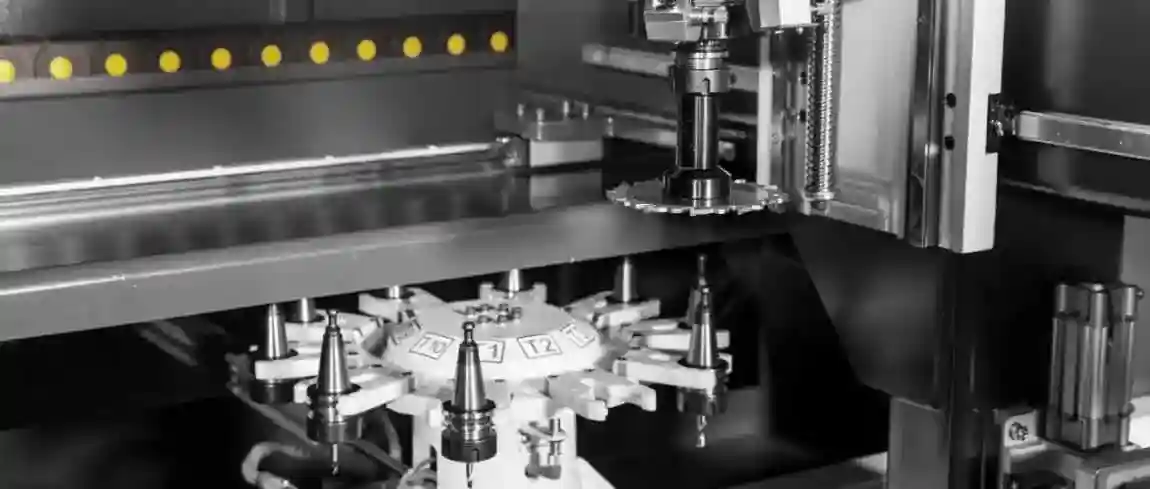
CNC machining centres for PVC profiles are a response to growing demands for flexibility, product variety and automation. They combine several machining steps in a single, centrally controlled system.
Typical functions of such centres include:
-
Length and angle cutting of profiles
-
Routing and drilling for hardware, handles and drainage
-
Machining of special shapes and cut-outs
-
Marking and identification of profiles
The benefits are obvious:
-
Fewer manual handling steps
-
High repeatability and process reliability
-
Direct data connection to ERP and planning software
-
Fast changeover between profile systems and product variants
In medium-sized and large operations, CNC profile machining centres are often the key to achieving high quantities while still handling a broad range of variants. Evomatec supports customers in selecting and integrating these systems and, through detailed inspections, makes sure that mechanics, control, safety technology and data connectivity work together as a coherent package.
H3
Automation, Handling and Internal Logistics
Beyond the actual machining equipment, handling and automation solutions are playing an ever greater role. Roller conveyors, transfer systems, buffer stations, automatic clamping and centring stations and data-controlled order sequencing help create smooth workflows and shorter throughput times.
Well-planned internal logistics ensure that profiles and frames arrive at the next machine on time, queues are reduced and operating staff are used efficiently. Anyone who wants to buy PVC window manufacturing machines should therefore not just focus on stand-alone units, but consider the interaction between technology, material flow and manpower as a whole.
H2
Technical Selection Criteria for PVC Window Machinery
Choosing the right machine is always a combination of technical, economic and organisational requirements. Some technical criteria are relevant for almost all machine types.
H3
Precision and Repeatability
Precision is the foundation of any quality-focused production. It shows in length and angle accuracy, positional accuracy of machining operations and repeatable parameters.
Important aspects:
-
High-quality guides and spindles
-
A rigid machine frame that minimises vibration
-
High-resolution measuring and positioning systems
-
Thermal stability and controlled motion sequences
The better these factors interact, the lower the dimensional deviations, rework and scrap.
H3
Control System, Software and Connectivity
The control system is the brain of every PVC window manufacturing machine. User interfaces, programme logic and communication interfaces determine how intuitively and efficiently a machine can be operated.
Modern control systems offer:
-
Recipe management and profile databases
-
Interfaces to production control and ERP systems
-
Diagnostic and remote maintenance functions
-
User management and permission structures
Powerful control technology simplifies set-up, reduces operator errors and enables continuous digitalisation of production processes. In inspections, Evomatec always checks that control system, safety technology and documentation form a consistent whole and that CE requirements are also fulfilled on the software side.
H3
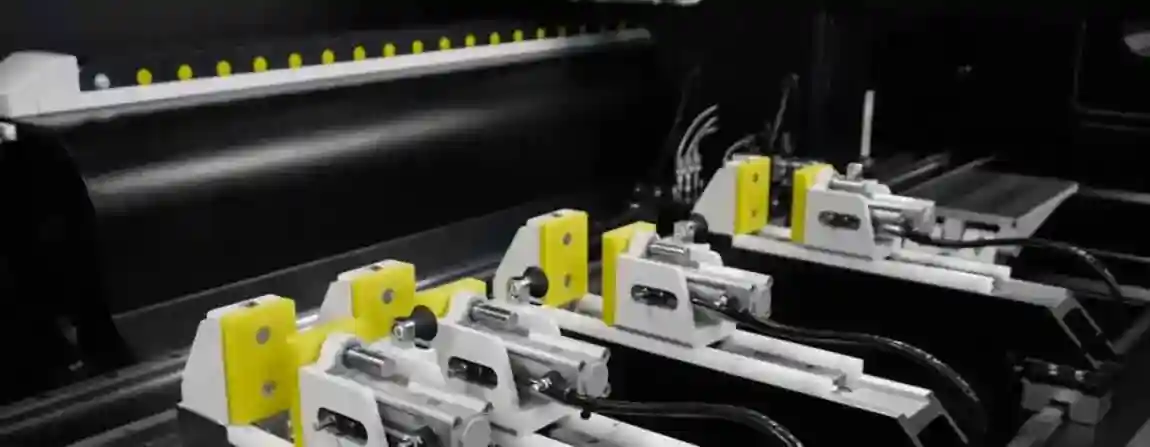
Clamping Technology, Tooling and Profile Support
Clamping and support systems determine whether profiles are held securely during machining. Poor clamping leads to vibration, dimensional errors and accelerated tool wear.
Key points:
-
Sufficient clamping force and profile-adapted clamping surfaces
-
Flexibility for different profile systems
-
Well-designed support to avoid deflection
-
Good accessibility for cleaning and maintenance
Regular inspections help detect wear early and take countermeasures in good time. When assessing components like these, Evomatec always looks at their impact on overall quality, process stability and CE-compliant safety.
H3
Energy Efficiency and Resource Conservation
Energy and resource efficiency are now strategic factors in window manufacturing as well. Machines with optimised drive concepts, intelligent power management, efficient compressed air use and effective extraction lower operating costs and environmental impact alike.
If you plan to buy PVC window machines, you should therefore pay attention not only to purchase price but also to energy demand, maintenance effort and tooling costs. Over the long term, these parameters determine the real economic performance of your investment.
H2
Quality, CE-Compliant Safety and Professional Inspections
No investment is fully assessed without looking at safety and CE conformity. Machines for PVC window production must meet all relevant requirements of the Machinery Directive and the applicable standards. This includes mechanical safeguarding, electrical safety functions, safety-related control systems and comprehensible documentation.
Based on numerous projects, Evomatec has developed a structured approach to check these requirements in a practical and efficient way. Our inspections are not limited to theoretical target states, but focus on real-world production practice – from emergency stop functions and protective guards to the interlocking of doors and service hatches.
Thanks to our many years of experience with a wide variety of system configurations, we are able to carry out inspections in such a way that both quality aspects and safety requirements are covered at a high level. The inspections are documented precisely and transparently with the aim of minimising operational risks, ensuring legal certainty and at the same time enabling economical production.
In many projects, it has become clear that operators benefit most when inspections are not seen as a mere obligation but as an opportunity for optimisation. Evomatec supports this with a holistic view of mechanics, electrics, control systems and organisation, and ensures that all findings from inspections flow into actionable recommendations.
H2
Profitability, Costs and Return on Investment
If you want to buy PVC window manufacturing machines, you must take a holistic view of the investment. In addition to purchase price, installation costs, training, running costs, maintenance, tooling, staffing and scrap rates all play a part.
A practical profitability analysis includes:
-
Investment costs for machines, peripherals and infrastructure
-
Installation, commissioning and staff training
-
Ongoing operating costs (energy, extraction, compressed air, tools)
-
Maintenance and repair costs
-
Labour costs under various automation scenarios
-
Quality costs (scrap, rework, warranty claims)
In many cases, a high-quality, well-automated machine proves to be the cheaper option in the long run, despite higher purchase costs, because it reduces personnel requirements, scrap and downtime while increasing output. Evomatec helps customers to analyse such scenarios and structure investments so that productivity, quality and CE-compliant safety are in an economically sound relationship.
H2
Practical Examples and Typical Application Scenarios
A small craft-focused fabricator with regional customers needs different solutions than an industrial volume producer running several shifts.
A typical craft business benefits from:
-
Flexible single-head or compact double mitre saws
-
A compact two- or four-head welding machine
-
A corner cleaning machine with adaptable programmes
-
One or two routing and drilling machines for hardware processing
An industrial volume producer, on the other hand, will often rely on:
-
High-performance double mitre saws or integrated cutting centres
-
Several multi-head welding machines
-
Fully automatic corner cleaning lines with profile libraries
-
CNC machining centres for complex profile processing
-
End-to-end automation and in-plant logistics
In both scenarios, the decisive factor is that PVC window machinery, capacities, staff structure and quality requirements form a coherent overall concept. Thanks to extensive experience from many very different customer projects, Evomatec can provide particularly precise advice here and tailor inspections to the actual needs of each business.
H2
Future Perspectives: Digitalisation, Networking and Sustainable Production
Development does not stand still. Digitalisation and networking are penetrating ever deeper into production processes. PVC window manufacturing machines are increasingly:
-
Connected to production planning and ERP systems
-
Optimised with digital twins and simulations
-
Equipped with sensors for condition monitoring
-
Integrated into data-driven maintenance concepts
At the same time, sustainable production concepts are gaining importance: energy efficiency, resource conservation, recyclability of materials and an overall environmentally conscious orientation of production are becoming real competitive factors.
Modern machines for PVC window production are therefore no longer just mechanical tools, but integral building blocks of a fully networked production environment. Evomatec supports this development with solutions that keep both technical modernity and CE-compliant safety in view and designs inspections so that new technologies and digital functions are also reliably assessed.
H2
Step-by-Step Approach to Buying PVC Window Manufacturing Machines
To structure the purchasing process and keep it on track, the following steps have proven effective in practice:
-
Analyse existing production and define targets
-
Specify capacity and quality requirements
-
Select relevant machine types along the process chain
-
Technically and economically compare suitable solutions
-
Examine CE conformity, safety concept and documentation
-
Plan installation, training and ramp-up phase
-
Develop a long-term strategy for maintenance, inspections and modernisation
Especially with complex investments, it pays to work with a partner who not only supplies machines but also supports planning, documentation, training and inspection as an integrated package. Drawing on long-standing project experience, Evomatec can ensure that machine selection, commissioning and periodic inspections maintain a consistent standard of quality and safety.
H2
Conclusion: Buying PVC Window Manufacturing Machines with Foresight and Structure
To buy PVC window manufacturing machines is to define your production structure for many years to come. Those who make this decision with appropriate care, look at the process chain, machine types, technical details, CE conformity, automation and profitability, lay the foundation for a powerful, future-proof PVC window production.
A seasoned partner like Evomatec can make this journey significantly easier: from analysing requirements and selecting suitable machines and configurations through to structured inspections and compliant documentation. Our experience from numerous customer projects enables us to carry out inspections, acceptances and follow-up checks in such a way that quality, productivity and CE-related safety are reliably assured in everyday operation.
H2
FAQ – Frequently Asked Questions about Buying PVC Window Manufacturing Machines
H3
Question 1: Which PVC window manufacturing machines are most important when getting started?
For a typical start, a high-quality sawing machine, a welding machine (often two- or four-head), a corner cleaning machine and at least one machine for hardware processing are crucial. This combination covers the core processes of cutting, welding, corner cleaning and functional machining. Depending on production volume, CNC machining centres, additional welding machines or automation components can be added later.
H3
Question 2: How important is CE conformity when buying PVC window machinery?
CE conformity is essential because it is directly linked to the legal responsibility of the operator. A machine must comply with the requirements of the Machinery Directive and relevant standards in terms of mechanics, electrics, control system and documentation. Missing or incorrect CE documentation can lead to significant legal and financial risks in the event of an accident or inspection. For this reason, machine inspections and CE checks should always be carried out by experienced specialists who understand both the technology and the standards.
H3
Question 3: From what size of operation does a CNC machining centre for PVC profiles become worthwhile?
A CNC machining centre typically becomes worthwhile when volumes, product diversity and flexibility requirements are significantly higher. In medium-sized and large companies, a CNC centre reduces the number of manual steps, increases repeatability and allows direct connectivity to planning systems. In smaller shops, a combination of conventional machines may be more economical as long as quantities and the variety of designs remain manageable.
H3
Question 4: How can I ensure that my PVC window machines remain economical in the long term?
Long-term economic performance results from the right mix of high-quality machinery, regular maintenance, qualified inspections and continuous process optimisation. This includes timely replacement of tools and wear parts, training of operators and systematic use of production data to reduce downtime and scrap. A partner such as Evomatec supports you with structured maintenance concepts and detailed inspections to identify risks early and take countermeasures before problems escalate.
H3
Question 5: What role does automation play in PVC window production?
Automation helps to use personnel more efficiently, shorten throughput times and reduce errors. It ranges from simple roller conveyors, through automatic clamping and centring stations, up to fully integrated lines with central control. The optimal level of automation depends on volumes, product mix and staff structure. It is important that automation solutions are technically mature, CE-compliant and ergonomically designed so that they work reliably in daily operation and are accepted by the workforce.
Request a free consultation at www.evomatec.com