 GERMANY
 ENGLISH
 FRANCE
 SPAIN
SPAIN PORTUGAL


Blog
BUYING WINDOW MANUFACTURING MACHINES
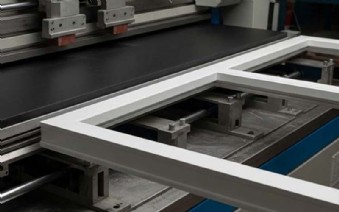
Buying window manufacturing machines – strategic guide for modern window production
Anyone who wants to buy window manufacturing machines faces a demanding strategic decision that will shape the technology, profitability, CE-compliant safety and future viability of the entire production. Modern window manufacturing machines determine productivity, quality, lead times and the competitiveness of a company in window, door and façade construction. At the same time, standards, automation, digitalisation and market requirements are more complex than ever before.
This guide offers comprehensive, practice-oriented orientation for entrepreneurs, production managers and technical decision-makers who are planning investments in window manufacturing machines. It covers technical fundamentals, machine types, application areas, costs, risks, future perspectives and shows which role an experienced partner such as Evomatec can play in planning, implementation and inspection. Thanks to our many years of experience from a large number of customer projects, we can ensure that inspections are always carried out with the highest level of diligence in terms of quality and CE-compliant machine safety – from initial consulting through to final acceptance.
Fundamentals: What are window manufacturing machines?
Window manufacturing machines are specialised production machines for windows, doors and façade elements which turn profiles, glass, fittings, gaskets and accessories into high-quality building elements. They are used in craft businesses, midsized production facilities and large industrial plants, and cover the entire process chain:
-
Cutting and mitre cutting of profiles
-
Profile machining (milling, drilling, grooving, notching)
-
Welding and joining technology for PVC profiles
-
Corner cleaning and post-processing
-
Hardware installation, pressing and glazing
-
Material flow, handling and automation
If you buy window manufacturing machines, you are not only deciding about individual worksteps, but about the structure, performance and quality level of your entire production. Modern systems are increasingly networked, monitor their processes themselves and provide data for quality management, maintenance and production planning.
Key machine types in window manufacturing
Cutting and sawing technology
The first step in the production process is profile cutting. Here it is decided to a large extent whether angles, lengths and surface quality are correct. Typical machines:
-
Mitre saws and double mitre saws for PVC and aluminium profiles
-
Crosscut saws and cut-off saws for precise length cutting
-
Automatic saws with NC-controlled stops and programmable cutting lists
A precise sawing system reduces scrap, minimises rework and lays the foundation for high-quality window production. When you buy window manufacturing machines, you should especially pay attention to the following for saws:
-
Cutting capacity and motor power
-
Accuracy of length and angle positioning
-
Stability of clamping systems
-
Operator friendliness of the control system
Particularly in an industrial environment, companies often rely on automatic sawing lines with profile magazines and automatic positioning. Evomatec not only supports machine selection, but also layout-optimised integration into existing factory structures. On the basis of many successfully implemented projects, inspection and testing concepts are designed so that sawing systems meet both quality and safety requirements of CE regulations.
Profile machining and CNC technology
After cutting, the next step is profile machining. This includes:
-
Milling of drainage holes and air slots
-
Drilling of handle, hinge and hardware holes
-
Notching profile areas for hardware and corner connections
-
Machining of special profiles and reinforcement profiles
Increasingly, CNC machining centres for window profiles are used here. Advantages of modern CNC technology:
-
Multi-sided machining without reclamping
-
High repeatability and programmable machining patterns
-
Profile libraries and automatic program selection
-
Integration into order and drawing data
If you want to buy window manufacturing machines, you should evaluate how well CNC centres can be integrated into existing data landscapes. Evomatec places great emphasis on open interfaces, understandable parameter structures and practical HMI interfaces that do not overwhelm operators. Thanks to extensive project experience, we ensure that inspections and function tests are also carried out accurately and with documented CE compliance on the software side.
Welding and joining technology for PVC windows
For PVC windows, welding machines are indispensable. Typical variants:
-
Single- or two-head welding machines for smaller operations
-
Four-head welding automatons for series production
-
Special welding machines for seamless or optimised weld seam appearance
Decisive factors are:
-
Repeatable welding parameters (temperature, pressure, time)
-
Compatibility with the profile systems used
-
Integration into downstream corner cleaning processes
Here, close coordination with profile suppliers and system providers pays off. An experienced supplier such as Evomatec brings practical knowledge gained from many welding lines: inspections, welding tests and CE-focused safety assessments are carried out using standardised, continuously refined checklists to ensure long-term stable processes.
Corner cleaning and post-processing
After welding, excess weld bead must be removed and corners need to be reworked for a clean appearance. Corner cleaning machines perform:
-
Removal of weld seams on the inside and outside
-
Machining of gasket areas
-
Adaptation to different profile contours
Modern machines use NC-controlled axes, profile libraries and quick-change tool heads. When you buy window manufacturing machines, you should consider:
-
Flexibility for different profile systems
-
Programmability of machining paths
-
Repeatable results in changing series
Evomatec combines robust mechanics with intelligent control systems in this field. Based on numerous customer projects, it has become clear that a consistently structured inspection practice – with a focus on quality, tool condition and CE-compliant safety – is crucial for operating corner cleaning machines at a high level over the long term.
Hardware installation, pressing and glazing
In later process stages, the following steps are carried out:
-
Hardware installation machines for automatic mounting of hinges, closing parts and handles
-
Frame and sash presses for secure pressing of constructions
-
Glazing stations and lifting aids that make heavy glass units easy to handle ergonomically
Here, ergonomic aspects, repeatability and work safety are particularly important. These machines must also be designed in a CE-compliant manner, with coordinated safety logic, emergency-stop concepts and protective devices.
Material flow and automation
Between process stages, transport and handling systems ensure a smooth material flow:
-
Roller conveyors, cross transfers, lifting and turning devices
-
Buffer sections to decouple individual stations
-
Automatic transport carts and storage systems
In complex lines, these components are software-linked: profiles and frames move automatically from the saw via the profile machining centre to the welding and corner cleaning station. Evomatec employs modular concepts here that can be expanded step by step. Practical experience from many installations worldwide makes it possible to design inspection and safety concepts that ensure CE-compliant protective functions while guaranteeing efficient, low-disruption material flow.
Manual, semi-automatic and fully automatic window manufacturing machines
Manual machines
Manual window manufacturing machines are comparatively simple in design and operated largely by hand. Advantages:
-
Low investment costs
-
High flexibility for one-off and special designs
-
Less complex control systems
Disadvantages:
-
Higher labour cost per unit
-
Stronger dependence on individual operator skills
-
Higher error rates and longer throughput times
For small workshops or companies with highly customised production, manual machines can still be the right choice.
Semi-automatic solutions
Semi-automatic machines combine manual operation with automated functions:
-
NC-controlled stops
-
Automatic clamping devices
-
Programmable machining cycles
They offer an attractive balance of investment cost, productivity and flexibility. Many medium-sized companies that buy window manufacturing machines start with semi-automatic solutions and later selectively invest in full automation.
Fully automatic lines
Fully automatic window production lines are designed for high volumes, standardised product portfolios and minimal cycle times. Typical features:
-
Automatic profile feed and cutting
-
Fully networked machining stations
-
Automatic welding, cleaning and pressing
-
Integrated buffers and transport sections
Such systems require:
-
Precise planning of production strategy
-
Clear definition of product range and target quantities
-
Well thought-out inspection and maintenance concepts
Evomatec brings extensive project experience to the table here: based on many implemented lines, recurring inspections, CE-compliant safety assessments and quality assurance routines are included from the outset. In this way, it can be ensured that systems work with maximum care in terms of quality and safety not only during trial operation, but throughout their entire service life.
Technical fundamentals of modern window manufacturing machines
Mechanics and drive technology
Mechanical design is the backbone of any window manufacturing machine. Important aspects:
-
Stiff machine frames, often welded or cast
-
High-quality linear guides and spindle systems
-
Precise clamping devices for profiles and frames
-
Powerful drives with well-matched gear units
Durability, accuracy and maintenance effort are directly influenced by the quality of mechanical components. If you think in the long term, you should not save on frames and guides when you buy window manufacturing machines.
Control systems, CNC and software
Modern machines use:
-
PLCs for sequence control and safety logic
-
CNC controllers for interpolated axis movements
-
Touch panels with intuitive user interfaces
-
Network and interface modules (for example to ERP systems)
A good control concept is characterised by:
-
Clear, understandable operating menus
-
Profile libraries and parameter management
-
Simple fault diagnosis and clear messages
-
Open interfaces for future extensions wherever possible
Evomatec develops control concepts with a focus on user friendliness and transparency. Thanks to consistently documented software structures and standardised inspections in customer projects, updates, extensions and CE-relevant changes can be implemented in a traceable and safe manner.
Sensor systems, measuring and quality technology
Modern production would be unthinkable without sensor systems. Common components:
-
Linear and rotary encoders for position determination
-
Proximity switches, light barriers and laser sensors
-
Pressure sensors in pneumatic and hydraulic systems
They make it possible to:
-
Position profiles, saw units and milling heads precisely
-
Detect malfunctions and misuse
-
Monitor safety functions
In combination with software modules, process data can be evaluated: tolerance deviations, machining times, tool life. This creates a basis for continuous quality improvement.
Safety technology and CE compliance
Safety is not an optional add-on; it is a basic requirement for operating window manufacturing machines. Key building blocks:
-
Risk assessment and defined safety concepts
-
Guarding, safety doors and interlocks
-
Emergency-stop systems and safety PLCs
-
Clear labelling, warnings and documentation
When you buy window manufacturing machines, you should pay special attention to:
-
Availability of complete CE documentation
-
Safety functions described in a transparent manner
-
Clearly defined inspection and maintenance intervals
Evomatec combines standards-compliant design with practical inspection concepts. The broad project experience ensures that inspections are not only formally described on paper, but consistently implemented in real production, well documented and CE-compliant.
Application areas and industries
Classic window and door manufacturing
The core field of window manufacturing machines is the production of:
-
PVC windows and doors
-
Aluminium windows and façades
-
Mixed systems with different materials
Here, machine technology and degree of automation determine volumes, lead times and quality levels.
Façade construction and project business
Façade companies process complex aluminium profiles, large-format elements and demanding glass structures. Here, particularly powerful profile machining centres, precise sawing systems and flexible clamping solutions are required.
Evomatec supports façade manufacturers in specifying suitable machining centres and establishing inspection and maintenance concepts that meet the demanding requirements of project business.
Special applications and industrial solutions
Beyond classic windows and doors, window manufacturing machines are also used in adjacent areas:
-
Conservatories, sliding systems, lift-and-slide systems
-
Special windows for industrial, laboratory or security applications
-
Profiles for façade substructures and special frames
In these cases, flexibility, programmable machining steps and modular machine systems are particularly important.
Historical development of window manufacturing machines
From handcraft to specialised machine technology
In the past, handcrafted production dominated:
-
Hand and table saws
-
Drill stands, milling machines and vices
-
Purely manual measuring and marking
With increasing demand and growing product variety, the need arose for specialised machines for window manufacturing to enable series production and consistent quality.
Introduction of PVC and aluminium profiles
With the spread of PVC and aluminium windows, new technologies became necessary:
-
Welding machines and corner cleaners for PVC
-
Saws and machining centres for aluminium profile processing
-
Profile machining centres with multi-side machining
This also changed the focus of investments: those who wanted to buy window manufacturing machines more and more had to consider profile- and material-specific technologies.
CNC technology and digital networking
The next evolution steps:
-
Introduction of CNC controllers and interpolating axes
-
Networking of machines via fieldbus and Ethernet systems
-
Integration with CAD/CAM, ERP and production planning
Today, many talk about Industry 4.0: networked window manufacturing machines, real-time data acquisition, predictive maintenance. Evomatec uses these developments specifically to create customer solutions in which inspection and safety concepts fit seamlessly into digital operating processes. Thanks to a wide pool of reference projects, we can ensure that inspections are carried out with maximum care, fully documented and CE-compliant in modern production environments.
Advantages of modern window manufacturing machines
Productivity and throughput times
Modern window manufacturing machines increase:
-
Cycle performance and output per shift
-
Automation of repetitive tasks
-
Efficiency of setup and changeover processes
The result: shorter throughput times, better planning reliability and improved delivery capability.
Quality and process stability
Through precise mechanics, modern control systems and high-quality tools:
-
Dimensional accuracy and angle precision are improved
-
Error and scrap rates are reduced
-
Customer satisfaction increases thanks to visually and functionally high-quality products
Quality-oriented companies that buy window manufacturing machines reach a much more consistent product quality.
Work safety and ergonomics
Automated handling solutions, protective enclosures and ergonomically designed workstations:
-
Relieve staff from lifting and turning heavy elements
-
Reduce the risk of injuries
-
Support a sustainable personnel strategy
In combination with systematic inspections and safety training, a safe and healthy working environment is created.
Profitability and total cost of ownership
Profitability means more than low purchase prices. Over a machine’s lifetime, the following matter:
-
Maintenance effort and spare parts costs
-
Energy and media consumption
-
Downtime and repair frequency
Evomatec considers these factors already at the quotation stage and supports operators in realistically assessing total cost of ownership. By means of standardised inspection concepts based on many years of field experience, we ensure that machine condition, CE safety and process stability are regularly checked and optimised.
Challenges and risks when buying window manufacturing machines
Technical complexity
With increasing automation, the following grow:
-
Number of components and interfaces
-
Training needs for operators and maintenance staff
-
Requirements for documentation and CE compliance
Without a solid plan and competent partners, this complexity can easily become a source of errors.
Dependence on software and interfaces
Proprietary data formats, closed interfaces or undocumented software structures can limit operators in the long run. When you buy window manufacturing machines, it is therefore important:
-
To prefer open interfaces wherever possible
-
To agree clearly on updates and support
-
To involve your own IT strategy early on
Service, spare parts and response times
Downtimes in window production are expensive. Therefore, the following points should be clarified:
-
Spare parts availability and delivery times
-
Remote support and remote diagnostics
-
Response times in case of breakdowns
Evomatec relies on structured service concepts with clear communication channels. Practical experience from many customer plants is used to plan inspections and maintenance in such a way that downtime risks are minimised and CE-relevant functions are checked regularly.
Decision criteria: how to choose the right window manufacturing machines
Production volume and manufacturing strategy
Before any investment, you should be clear about:
-
Short-, medium- and long-term output targets
-
Whether series production or project-based one-off production is the focus
-
How strongly demand fluctuates seasonally
The answers determine whether manual, semi-automatic or fully automatic window manufacturing machines are most suitable.
Material mix and product portfolio
Depending on the material, machine types and tools differ:
-
PVC windows: welding technology, corner cleaning, profile machining
-
Aluminium windows: machining centres with coolant management, powerful saws
-
Wooden windows: specific milling techniques, surface and chip management
Many companies combine several materials. In such cases, Evomatec focuses on modular, scalable plant concepts that can be expanded step by step.
Profile systems and variety
The number and diversity of profile systems influence:
-
Programming effort
-
Need for profile libraries
-
Flexibility of clamping and machining devices
When you buy window manufacturing machines, you should check how conveniently profile data can be managed and whether future profile systems can be integrated.
Factory layout and material flow
Machine selection and layout planning go hand in hand:
-
Space requirements and positioning of systems
-
Routes for materials, staff and finished products
-
Buffer zones between process steps
Evomatec supports customers in developing layout variants and optimising them based on real-world experience. Inspection points and safety-relevant zones are integrated into the planning so that CE-compliant safety distances, escape routes and inspection areas are ensured later on.
Integration into IT and organisation
A modern operation requires:
-
Seamless data flows from order to finished element
-
Connection of machines to ERP or production planning systems
-
Clear roles and responsibilities in production and maintenance
This organisational dimension is just as important for the success of an investment as the technology itself.
Profitability and costs when buying window manufacturing machines
Investment costs
Investment includes:
-
Machine price and options
-
Transport, packaging and insurance
-
Installation, commissioning and training
-
Any adaptations to foundation, power supply, compressed air
A well-thought-out proposal breaks down these items in a transparent and comprehensible way.
Running costs and life cycle
During the service life, the following costs arise:
-
Energy and media consumption
-
Tools and wear parts
-
Maintenance, inspections and repairs
-
Personnel costs for operation and technical support
Evomatec uses empirical values from many projects to derive realistic cost scenarios. As a result, investment decisions can be based not only on purchase price, but on the entire life cycle.
Amortisation and return on investment
Key questions:
-
From when does the investment pay off through productivity gains?
-
How does the machine affect scrap, complaints and service costs?
-
What role do energy consumption and maintenance strategy play?
Here, a systematic inspection and maintenance plan truly pays off. Evomatec’s long-standing project practice shows that companies which consistently rely on documented, CE-focused inspections usually achieve lower downtime costs and more stable productivity levels.
Practical examples from the window industry
Example 1: Craft business on the way to series production
A small PVC window manufacturer has been working with manual saws and simple machining stations so far. Demand is rising, lead times are becoming critical. Objectives:
-
Reduce throughput times
-
Improve angle and length accuracy
-
Relieve staff
Solution:
-
Investment in a more precise double mitre saw
-
Introduction of a compact profile machining centre
-
Partly automated welding and corner cleaning processes
Evomatec accompanies the project from planning to commissioning. Drawing on experience from many similar operations, inspections and safety tests are structured in such a way that even small systems achieve a high level of quality and CE-compliant safety.
Example 2: Midsized company with mixed production
A company produces PVC and aluminium windows, owns heterogeneous machine technology from different manufacturers and suffers from complex workflows. Objectives:
-
Harmonise control concepts
-
Build a networked profile machining system
-
Introduce standardised inspection and maintenance processes
Solution:
-
Selection of compatible window manufacturing machines with a consistent operating philosophy
-
Installation of a flexible profile machining centre for both material types
-
Introduction of a documented inspection system in cooperation with Evomatec
The company’s broad project experience ensures that inspections, safety tests and CE documentation are implemented with high precision and transparency – and that machines are in practice operated as safely as described in the documents.
Example 3: Industrial plant with fully automatic line
A large manufacturer supplies several markets with standard windows in high volumes. The existing line is outdated and breakdowns are increasing. Objectives:
-
Build a modern, fully automatic production
-
Maximise availability
-
Implement continuous machine data monitoring
Solution:
-
Fully automatic cutting, machining, welding and corner cleaning line
-
Integrated buffer sections and automatic transport technology
-
Data collection for analysing cycle times, malfunctions and maintenance needs
Evomatec takes over the project engineering of the system, and develops inspection and maintenance guidelines, CE-compliant safety concepts and comprehensive staff training. Based on numerous reference installations, an inspection structure is implemented that ensures quality and CE requirements are met throughout the entire life cycle of the system.
Quality, inspections and CE-compliant safety as success factors
Acceptance of new machines
For new window manufacturing machines, structured acceptance is crucial:
-
Function test of all aggregates and safety functions
-
Checking documentation, circuit diagrams and declarations of conformity
-
Test runs with real profiles and sample series
Evomatec works with standardised acceptance protocols based on practical experience. This ensures that the machine runs reliably and safely not only during the commissioning phase, but also during everyday operation.
Regular inspections and maintenance
Long-term operational safety requires:
-
Periodic inspections of guarding, emergency-stop circuits and interlocks
-
Checking guides, spindles, clamping systems and drives
-
Testing of sensor systems, safety circuits and software functions
On the basis of a broad base of experience, Evomatec ensures that inspections are implemented in a practical, reproducible and CE-compliant manner. Many years of project practice in different types of operations make it possible to design inspection plans that keep both safety and availability in mind.
Documentation and traceability
Complete documentation is indispensable:
-
Test protocols and checklists
-
Maintenance plans and records
-
Change documentation for modifications
-
Training certificates for operators and maintenance staff
Evomatec’s project experience shows that clear, gap-free documentation is not only important for audits, but also significantly facilitates cooperation between operator, service providers and authorities.
Training and qualification
Technology is only as good as the people who operate it. Training is crucial:
-
Operator training for safe and efficient use
-
Maintenance training for troubleshooting and servicing
-
Regular safety briefings
Again, the wealth of experience from many projects comes into play: training content is adapted to company size, qualification level and machine configuration so that theory and practice fit together and CE requirements are truly implemented in day-to-day work.
Future trends: where are window manufacturing machines heading?
Growing demands on energy efficiency and comfort
Modern windows must meet ever higher requirements regarding:
-
Thermal insulation and U-values
-
Sound insulation and burglary resistance
-
Comfort features and automation
This leads to more complex profile geometries, thicker glass units and new hardware technologies. Window manufacturing machines must reflect these developments, for example through:
-
More powerful machining centres
-
More flexible clamping and handling solutions
-
Adaptable software and profile libraries
Automation, robotics and handling
Robotics is becoming increasingly important in window manufacturing:
-
Gripper solutions for heavy glass and frame elements
-
Automated loading of saws, machining centres and welding lines
-
Palletising of finished elements
Evomatec is working on integrated automation solutions which intelligently combine robotics, handling and window manufacturing machines while ensuring CE-compliant safety. Practical experience shows that a comprehensive inspection concept covering both classic machines and modern robotics is crucial for long-term success.
Digitalisation and data analysis
Digitalisation means:
-
Real-time acquisition of machine data
-
Evaluation of KPIs (OEE, downtime, scrap rates)
-
Planning maintenance proactively
Anyone who wants to buy window manufacturing machines today should look for future-proof data and communication interfaces. Evomatec uses its experience to make data not an end in itself, but a tool for optimising quality and safety.
Sustainability and resource efficiency
Sustainability is gaining importance:
-
Reducing material scrap and waste
-
Energy-efficient drives and intelligent standby concepts
-
Durable machine designs and retrofit capability
Window manufacturing machines that take these aspects into account improve not only a company’s ecological footprint, but also its economic stability.
Step-by-step approach: buying window manufacturing machines in a structured way
Step 1: Define objectives
-
Clarify capacity and target markets
-
Define product portfolio and material mix
-
Set quality and lead time targets
Step 2: Conduct a status analysis
-
Record existing machines, bottlenecks and main causes of downtime
-
Analyse factory layout, material flow and organisation
-
Assess current safety and CE situation
Step 3: Create a requirements specification
-
Define technical requirements (cutting capacity, machining scope, degree of automation)
-
Specify requirements for software, interfaces and data integration
-
Describe service, training and inspection requirements
Step 4: Compare offers
-
Assess not only prices, but also scope of services and life cycle costs
-
Check CE documentation, safety concept and inspection strategy
-
Compare references and project experience of suppliers
Evomatec can leverage its strengths here: many years of experience from different project types enable realistic, practical and CE-compliant solutions in which inspections and quality checks are planned from day one.
Step 5: Implementation, commissioning and acceptance
-
Detailed project planning with milestones
-
Coordination of installation, training and test series
-
Systematic acceptance with documented test protocols
Step 6: Operation, inspection and optimisation
-
Establish regular inspections and maintenance
-
Evaluate key performance indicators of window manufacturing machines
-
Implement improvement measures in a targeted manner
Through a structured approach, buying window manufacturing machines becomes more than a one-off purchasing act: it turns into a long-term investment strategy that harmonises technology, CE safety, quality and profitability.
Conclusion: buying window manufacturing machines strategically and benefiting long-term
To buy window manufacturing machines today means taking far-reaching decisions that go well beyond cutting capacity or machining speed. It is about:
-
The strategic direction of your entire production
-
Ensuring compliance with quality and safety standards
-
Integration into digital processes
-
Economic stability over the entire life cycle
Those who understand the technical fundamentals, know the application areas, evaluate decision criteria in a structured way and rely on an experienced partner create the basis for future-proof, safe and profitable window production.
Evomatec combines proven machine technology with planning expertise, service and inspection know-how. Drawing on numerous customer projects, we ensure that inspections, acceptances and recurring tests are consistently carried out with the highest level of diligence, clear documentation and strict CE compliance. In this way, buying window manufacturing machines becomes a sustainable investment in quality, safety and competitiveness.
FAQ on buying window manufacturing machines
Which window manufacturing machines do I need as a small company?
Smaller companies usually need:
-
A precise double mitre saw
-
Basic profile machining machines or a compact machining centre
-
Welding and corner cleaning technology for PVC, or suitable machining machines for aluminium
The crucial point is that machines are flexible and able to process different profile systems. An experienced partner such as Evomatec helps you develop a phased investment plan that matches your company’s growth.
How important is CE compliance when buying window manufacturing machines?
CE compliance is indispensable. It confirms that essential safety and health requirements are met. When you buy window manufacturing machines, you should always check:
-
A complete declaration of conformity
-
Risk assessment and safety concept
-
Transparent documentation
Evomatec ensures, based on extensive practical experience, that inspections and acceptances are consistently aligned with CE-compliant safety so that companies can operate in full legal security.
From which point does a fully automatic window production line make sense?
Fully automatic lines make sense when:
-
High and stable volumes are required
-
Series production with a defined profile spectrum is the main focus
-
Personnel resources are limited and productivity must be increased
Before investing, realistic scenarios should be calculated. Evomatec supports you with profitability calculations, layout planning and the design of inspection and maintenance concepts so that a fully automatic line convinces not only from a technical but also from an economic point of view.
Request a free consultation at www.evomatec.com